 General Interest Webzine
(music, poetry, arts, spiritual &
heaps of links)
General Interest Webzine
(music, poetry, arts, spiritual &
heaps of links)
Scroll down to view the wordscape
Archived stories (prior to mid-2004
 VoIP now focused on new features
(TR, December 2004)
VoIP now focused on new features
(TR, December 2004)
New birds migrating to Kiwi
airspace
(TR, October 2004)
IP makes urgent
call on PBX market
(TR, September 2004)
Eftpos network
and terminal upgrades
prepare market for smart card wave
(TR, August 2004)
Broadband charging stifles rich
content delivery
(TR June 2004)
Broadband is 256kbit/sec says
Telecom
(The Line July 2004)
More fibre needed for advanced
services (The Line July 2004)
Balls required for market
results
(The Line July 2004)
NGI head takes parting shot
at slow science
(The Line July 2004)
Beyond ad hoc bolt-on
solutions - new security threats
(Telecomms
Review, June 2004)
Unbundling essential to
drive broadband content
(Telecomms
Review, June 2004)
Lack of
interoperability may slow broadband use
(Telecomms
Review, Nov 2003)
LANS expand to
cope with convergence
(Telecomms
Review, Nov 2003)
Superhighway to
close divide
(Telecomms
Review, August 2003)
Boom,
bust, build-out theory predicts internet upswing
(iStart 2003)
Smaller
telcos scramble for crumbs
(Telecomms
Review, April 2003)
Broadband
loses ground
(Telecomms
Review, June 2003)
Regions
on wrong side of digital divide (Telecomms
Review, July 2003)
Hybrid systems
bridge PABX and pure IP
(Telecomms
Review, August 2003)
Technology and
business columns
Information
Overload
Overcoming techno-stress
(A living document. Comment and
additional research invited)
Special
Report: Nailing down hits and clicks
The
billion dollar New Zealand advertising industry is to get standardised
metrics to help define where the on-line dollar is best spent ultimately
establishing a benchmark for the entire internet industry to pin down
those elusive clicks and hits.
Defending your
in-box: Evicting the spammers
By Keith Newman ( www.istart.co.nz )
spam (sp m) n. 1. A trademark used
for a canned luncheon-like product consisting primarily of pork pressed into a
loaf. 2. Unsolicited e-mail, often of a commercial nature, sent indiscriminately
to multiple mailing lists, individuals, or newsgroups; junk e-mail. A significant ramp up of junk mail
arriving in private and corporate inboxes this year alongside an increase in
virus activity is causing a good deal of frustration with many people wondering
what they can do to curb the onslaught.
Other IT related comment:
Contradictions
for Entrepreneurs - Nov 30, 2001
Always-on
Enterprise Emerging - Nov 23
Sneakernet
II Links digital Devices - Nov 16, 2001
IT
Skills Shortage Unabated - Nov 9, 2001
PC Must Become
People Centric -
Nov 3, 2001
Music Industry
Gatecrashes MP3 Party
No
Time To Sit On
the Fence - Broadband communications
Security Health Check Essential
The Next Merciless Leap
- Endless technology innovation
Batten
Down the Hatches - Storm clouds ahead
The Latest
Links (News, IT and other interesting weblinks)
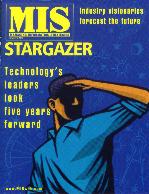
MIS
Stargazer
1999 ( www.misweb.com )
is a four yearly gaze into the future by executives from top IT companies.
I was asked to edit the local 1999 edition of this magazine and to
introduce my own projections for the future. (read
on)
The
Social Impact of Technology
Visionary
Leadership Overdue By Keith Newman (MIS, May 2001)
An old
Hungarian proverb has been firmly etched into my mind
these past few years which, roughly translated, says:
"if you are always trying to be like someone else who’s
going to be you?"
 It’s been an insightful incentive for me
as I traverse middle age and wonder whether New Zealand’s
identity crisis will ever be resolved by trying to become
another Ireland, Finland, Singapore or Silicon Valley.
It’s been an insightful incentive for me
as I traverse middle age and wonder whether New Zealand’s
identity crisis will ever be resolved by trying to become
another Ireland, Finland, Singapore or Silicon Valley. More MIS comment
columns
More MIS comment
columns
Kiwi
Edge Needs Sharpening
(Internet.com: May 2001)
New Zealand needs
a new flag, a good slogan everyone can relate to, new
myths and an optimistic spirit, according to New Zealand
Edge web site co-founder and editor Brian Sweeney.
Contradictions for Entrepreneurs
By Keith Newman, Nov 30th
So we’re being told again that New Zealand is one of the most
innovative nations in the world - will we rally this time or yawn and
roll over waiting for the tall poppy combine harvester to thresh the
next crop of faith and hope into doubt and despair?
Those who misinterpret visionary thinking as arrogance
and reject national pride as uncool undermine our fragile sense of
identity. Rather than fuelling the ‘Kiwi cringe’ that everyone,
everywhere else does it better, it’s time encourage each other to ‘go
for it’
Always-on
Enterprise Emerging
By Keith Newman
A couple of years back dotcommers still hyped from the illusion they could extract big internet bucks from the ether, jumped on the next bandwagon convinced the market was ripe for on-line software rental.
There was a rush to host the latest and
greatest applications, believing small to medium
businesses would eagerly by-pass the hassles of internal
IT investment and management to run with the new model. It
was thought demand for monthly rental of Microsoft’s
Office suite for example might pave the way but cost and
uncertainty over returns scared off the customers.
Sneakernet II, Links Digital Devices
By Keith Newman, Nov 16
High capacity miniature memory cards that can transfer files between computers, cameras and cellphones offer a new spin on the old ‘sneakernet’ concept, challenging forever the way we store and share information.
Sneakernet was pre-internet slang for manually moving
data between computers using floppy disks. A few years back it looked
like the floppy disk with its frustrating 2Mb limitations had reached
the end of the line with the arrival of the PC card.
IT
Skills Shortage Unabated
By Keith Newman, Nov 9, 2001
Claims an inflow of immigrants is offsetting our brain drain and our
recruitment agencies are inundated with off-shore IT experts seeking
safe harbour, low pay and the Kiwi lifestyle are fabrications.
The bulk of immigrants this past year have
been un-skilled and rumours of an influx of technology
talent evacuating from Europe, the US, the Middle East and
Australia to our remote greener pastures have so far
failed to translate into reality.
PC Must Become
People Centric
-
New Zealand Business Times - Nov 2, 2001
By Keith Newman
The personal computer has in the past
20-years turned the workplace upside down, transformed
business, entertainment and communications and spawned the
knowledge economy, the digital divide and the era of 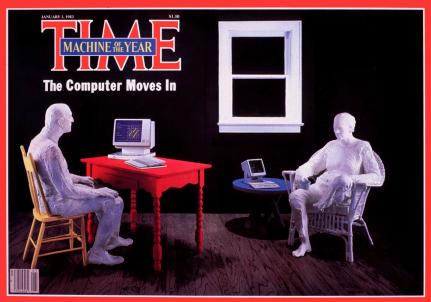 worker chained to the desktop.
In conjunction with the internet the PC
has bridged the world bringing scattered family, friends
and like-minded collaborators into close-knit electronic
communities while giving us more reason to avoid to face
to face communication with those in the same house, office
or town.
Music Industry
Gatecrashes MP3 Party -
October 26, 2001
Major record labels are knee-capping on-line rivals,
hi-jacking their technology and using snooping tactics to
catch counterfeiters after being caught off-guard by the
runaway success of MP3.
They’ve been quick to criticise attempts by rivals to provide on-line
access to music but exceedingly slow to come up with an alternative. Now
the five major labels, representing 85 per cent of the industry, are
readying their own digital distribution and moving rapidly to unplug all
competition.
No Time To
Sit On The Fence
October 19, 2001
The truth is ‘out there’ – we have no rural
communications problem, farmers are to blame for poor
internet access because they haven’t been weeding under
their electric fences.
In the future rather than driving around
on tractors farmers may have to shift sheep between
paddocks and feed out hay using ruggedised ride-on
lawnmowers.
NZBT
column archives
In these uncertain times with the hi-tech
economy floundering, ruthless terrorists undermining world
peace and increasing hack attacks and viral outbreaks
there’s a growing sense of insecurity. MIS
Magazine monthly columns
MIS
Magazine monthly columns
(managing information strategies)
Security Health Check Essential (November)
In future
businesses may need to commission regular
industry-recognised audits and post an official ‘secure
and healthy’ certificate to help restore confidence in
digital transactions.
The Next Merciless Leap (October,
2001) Just as we’re getting comfortable with
the awesome implications of the Internet we’re told it’s
becoming obsolete and a next generation, all singing and
dancing, industrial strength version is necessary.
Sometimes I wish the world had a pause button so we could put everything
related to technology on hold, catch our collective breath and
assimilate the enormous changes of the past two decades.
Batten
Down the Hatches
September
2001 Earlier this year on-line content
providers were taking the fall. I was so cocky that after
a quick reassurance, I went to print proclaiming
confidence in my tenure as editor of the local
Internet.com site.
The winds of change are blowing up a storm, only the wise,
the wealthy and wily will be around to champion the next
economy when the dust settles amid the twisted wreckage of
the last one.
Within weeks the site was gone.
Kiwi
Edge Needs Sharpening
(May 2001)
New Zealand needs
a new flag, a good slogan everyone can relate to, new
myths and an optimistic spirit, according to New Zealand
Edge web site co-founder and editor Brian Sweeney.
Don’t
Let Knowledge Wave Goodbye (March
2001)
We’re a nation of 3.8 million
well-educated people with a modern infrastructure, an
abundance of creativity and a pioneering spirit. We should
be an incredibly wealthy little nation by now but we’re
slipping down a slippery slope. Keith Newman asks what’s
gone wrong?
The
Future is Now, says Futurist (Jan 2001)
The world is passing through a genuine
technological revolution of historic proportions but those
who don’t become early adopters will miss out on “the
transformational potential” of this moment, says
Futurist lifestyles editor David Pearce Snyder.
Futurist
Applauds Kiwi Assets (Jan
2001)
New Zealand’s technological literacy, the
fact it is an English speaking nation, the quality of its
innovators and its size, beauty, and temperature together
give it a competitive advantage as the world becomes
increasingly technologically driven.
From the archives of
the now defunct nz.internet.com, edited by Keith Newman,
which closed
in May 2001.